
The deadlift is a full body exercise engaging muscles in the lower back. and legs. This exercise helps to improve posture and provide the strength and flexibility for lifting heavy items and performing ADL’s (Activities of Daily Living). To avoid injury, use proper form and control, while engaging the core.
The deadlift can be performed with various types of weights and loads, including the barbell, dumbbells or kettlebell. These variations and their differing advantages are discussed below.
Barbell Deadlift
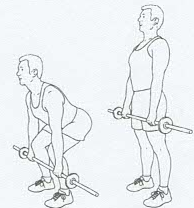
- With bar on the floor (with added weight plates), stand close to it, feet shoulder width apart. Place your toes under the bar.
- Hinge at the hips, keep your flat back and slightly bend your knees to grasp the bar. The grip should be wider than your legs. There are differing grips that may be employed to grasp the bar, each has its own pros/cons:
- Double Overhand Grip – Palms are facing you. This grip uses forearm muscles and may cause fatigue.
- Mixed Grip – One hand is placed in the overhand position, the other hand is in an underhand grip. Forearm stress is reduced using a mixed grip.
- Hook Grip – Thumbs of both hands are wrapped around the bar; fingers hooked over the top of the bar. This is a strong grip but can cause some discomfort.
- Strapped Grip – Leather or nylon straps are wrapped around the bar. once and securely tightened around the wrist for a firm grip. This can decrease bar feel and control, but it does eliminate grip fatigue.
- After gripping the bar lower your buttocks down and backwards. Brace your core and push with your legs. Your legs and shoulders move upward in unison. along with the hips as you extend your hips and knees. Keep the bar against your body as you lift the weight off the floor. The barbell should very lightly graze your shins.
- As the barbell passes your knee, thrust hips forward to lock the bar out. Hold at the top for a moment before lowering the weight down.
- Maintain a neutral spine as you lower the weight. To lower, hing at the hips and bend your knees.
Dumbbell Deadlift
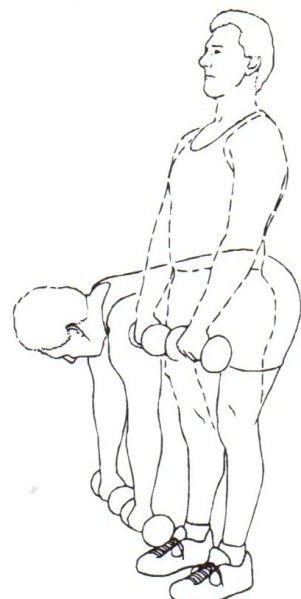
- Stand, feet hip distant apart, hold a dumbbell in each hand at sides.
- With chest up, shoulders back and soft knees, engage your core.
- Hinging at the hips and keeping back flat, lower the dumbbells down in front of your legs. Feel the stretch in your hamstrings. Make sure to keep the dumbbells close to your body, avoiding strain.
- Pushing through your heels, stand back up to starting position.
Kettlebell Deadlift
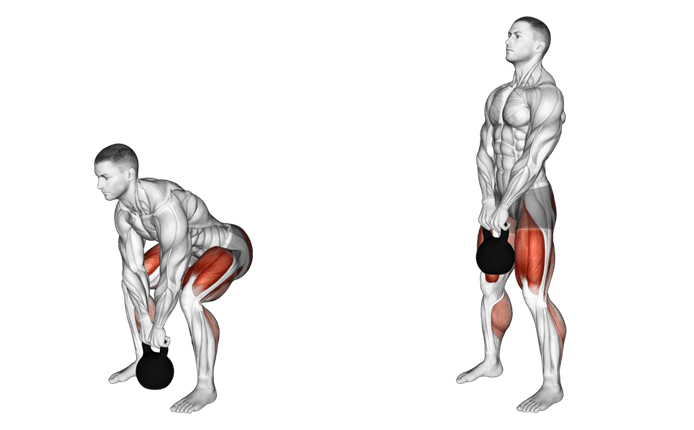
The kettlebell deadlift places a centralized load before your body …..similar to picking up a box or a boulder.
To perform a Kettlebell. Deadlift:
- Place a kettlebell between your feet. Keep feet shoulder width, toes pointing forward. Engage your core.
- Grasping the kettlebell with both hands, maintain a flat back, push into the floor and lift the kettlebell to standing upright. Squeeze shoulder blades and glutes.
- Using control, hinge at the hips to begin lowering the kettlebell back down.
- Do not round your shoulders or spine. Do not let your knees move inward
Performing deadlifts can build strength and help prevent injury. Deadlifts will also improve balance and core stability, helping to reduce lower back pain and improve posture. Weight-bearing exercises like deadlifts increase bone density, helping to prevent osteopenia and osteoporosis.
Deadlifts are a good addition to your workout. As you become stronger, increase the number of reps and/or add weight.
 Nancy L. Fitness