
The Bench Press is a strength training exercise that works the muscles of the upper body. This compound exercise targets the muscles of the upper body: working both the major and minor pectoralis (pecs) muscles, as well as the triceps brachii and anterior deltoid (shoulder), increasing upper body strength. It begins with lying on a bench and a pressing weight upward using either a barbell or a pair of dumbbells.
There are several variations of bench presses that each work different muscles. These may involve lying flat, lying at an incline or decline, or placing your hands closer together on the barbell.
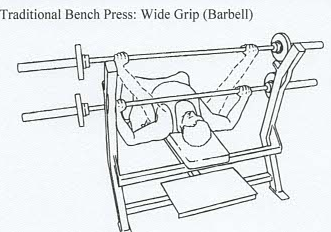
This exercise is done lying down on a flat bench. The weight/ barbell is pressed up by extending the arms at chest height, then it is lowered down. to chest level. This movement is considered one repetition, or rep.
- Plant feet firmly on the floor, keeping knees bent and shoulder blades squeezed together.
- Contract muscles and unrack the bar; position it over your shoulders.
- Lower it down toward your chest.
- The barbell should move up and back towards your head. Keep shoulders, elbows, and wrists aligned vertically.
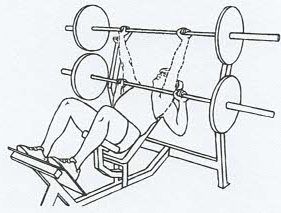
This Bench Press hits some different muscles: the triceps and front deltoids are utilized to a greater degree and a greater portion of the upper chest rather than just the pecs.
- Set the head of the bench to an angle between a 20- and 40-degree incline.
- Grap the bar using the same grip as used with the flat bench press.
- Unrack the barbell and lower it to upper chest.
- Press barbell back up to starting point. That is one repetition (rep).
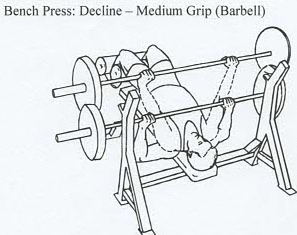
This variation is less stressful on the back and shoulders. The bench should be angled downward, so when you lie down your feet are in a higher position than your head. It works the lower chest muscles, triceps and shoulders.
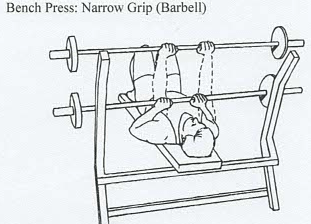
During this variation, place your hands in a narrower position together on the barbell. It works the triceps and forearms.
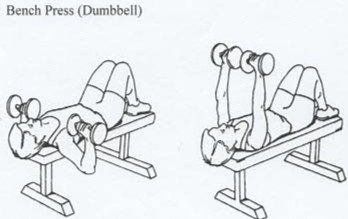
This version of the Bench Press trains the same muscles but it requires more coordination than the barbel version. because two weights need to be stabilized instead of just one weight (barbell). It can magnify imbalances in strength between the two arms.
Equipment Needed: Use a pair of dumbbells for this variation and a flat bench.
- Using a flat bench, hold a pair of dumbbells and sit on the end of a weight bench.
- In one motion rock back onto the bench and bring the weights up to arm’s length.
- Lower the dumbbells down toward your chest and push them back up, engaging the chest muscles.
 Nancy L. Fitness