
Eating a balanced diet helps to provide the nutritional support needed to maintain a healthy, energetic life. So, what is a balanced diet? The word, diet, is derived from the Greek word, diaita, meaning “way of living” / “lifestyle”.
A balanced diet Includes a combination of vegetables, fruits, whole grains, lean proteins, and healthy fats. Consume these diverse nutrients in the right proportions to sustain energy, growth, cell repair, and to reduce the risk of disease.
A good nutritional combination includes:
- Protein – the building blocks for muscles, skin, hair, and organs. Protein is essential for growth, repair, and hormone production. 10 to 35% of one’s daily calories should be protein.
- Fish, meat, dairy, eggs, beans, nuts, and legumes are good choices.
- Grains – whole grains supply fiber. Grains help regulate blood sugar, lowering diabetes risk.
- Carbohydrates – are a main energy source. Carbohydrates are broken down into glucose for immediate fuel. Complex carbs (whole grains, vegetables) provide sustained energy; simple carbs (fruits, sugars) give quick energy. 45–65% of daily calories should be carbohydrates.
- Healthy fats – store energy, support cell function, and help nutrient absorption. Healthy fats come from fatty fish, nuts, seeds, and plant oils. 25–35% of daily calories.
- Fatty fish, rich in Omega-3’s.
- Healthy fats, nuts, seeds, olive oil
- Vegetables – especially leafy greens, berries, variety of colorful plants (eat the rainbow). Add variety with herbs like rosemary, sauté in olive oil.
- Legumes and beans – for plant-based protein
- Fruits – provide vitamins, minerals, and antioxidants that protect blood vessels and reduce inflammation.
- Water – brings nutrients and oxygen to cells. Water helps to regulate body temperature, and supports digestion.
These nutrients help the body to function, grow, and maintain energy levels. Good nutrition fuels your brain, muscles, bones, nerves, skin, blood circulation, and immune system. It helps protect against chronic diseases such as heart disease, diabetes, cancer, and osteoporosis.
There is also a category of food referred to as Superfoods. Although there is no scientific definition or official guideline for Superfoods, the foods labelled as such, are typically high in nutrients and low in calories. They are good sources of essential nutrients, antioxidants and vitamins and minerals. Some of the foods in the “superfood” category to include in your diet are:
Green Beans – low in sodium, very low in saturated fat and cholesterol. Green beans are also a good source of protein, thiamin, riboflavin, niacin, vitamin B6, calcium, iron, magnesium, phosphorus, potassium and copper, vitamin A, vitamin C, vitamin K, folate and manganese, along with dietary fiber.
- Also try raspberries, chickpeas and strawberries.
Salmon – contains Omega-3 fatty acids, which the body does not produce by itself. These fatty acids are said to reduce inflammation, improve circulation, and increase the ratio of good to bad cholesterol. Salmon is also a good source of selenium and B vitamins.
Be mindful, however, of the differences between farm-raised Salmon and wild caught Salmon:
- Farm-Raised Salmon may contain high levels of antibiotics and pesticides.
- Wild fish may have a lower concentration of PCBs but could be higher in mercury.
- Also try Tuna.
Watermelon – provides lots of vitamins, minerals, and antioxidants with few calories. Watermellon is a good source of vitamin C and lycopene, and is said help protect against some types of cancer, obesity, diabetes, and heart disease. Watermelon is a guilt-free, easy dessert helping with bodily hydration and maintenance of collagen for hair and skin.
- Also try cucumbers (95% water), salad greens (90% water), strawberries (91%), cantaloupe (90% water) and honeydew (90% water)..
Blueberries – contain polyphenols (heart healthy), phytonutrients (antioxidant and anti-inflammatory), vitamin C and fiber to help fight chronic diseases. They also work to protect the brain from inflammation and help to improve memory by promoting communication between brain cells. A cup of berries can increase levels of HDL (good cholesterol) and lower blood pressure.
- Also try red raspberries and strawberries.
Tomatoes – can be fruit or vegetable. They come in many varieties and contain vitamin A, vitamin C, vitamin K, vitamin B6, folate, thiamine, potassium, manganese, magnesium, phosphorus, lycopene and copper along with fiber and protein. Research indicates that the combination of nutrients in tomatoes may help prevent heart disease, stroke, high blood pressure, high cholesterol, and prostate cancer..
Tomatoes may be eaten raw or as an ingredient in foods. Add tomato to sandwiches, salads, sauces; make salsa; eat as a snack.
A Mediterranean-style diet contains many of those Superfoods and is beneficial to health. The Mediterranean diet emphasizes whole grains, fish, nuts, legumes, olive oil, fruits, vegetables and potatoes. It is rich in antioxidants, phytochemicals, fiber and Omega-3 fatty acids.
Following the Mediterranean diet and engaging in physical exercise along with consuming moderate amounts of wine – and no smoking, results in a 65 percent reduction in overall deaths from heart disease, cancer and other causes. Diets like the Mediterranean and plant-based diets lower blood pressure, improve cholesterol, and reduce inflammation.
So, Key Food Groups to Prioritize when planning a menu include
- Whole grains: Supply fiber and help regulate blood sugar, lowering diabetes risk.
- Lean proteins: Include plant-based sources (beans, lentils, nuts) and fish/seafood; limit processed meats.
- Healthy fats: Use unsaturated fats (e.g., olive oil) instead of saturated fats
- Minimally processed foods: Reduce intake of ultra processed items high in added sugars, salt, and unhealthy fats.
- Colorful produce and whole grains
These foods provide essential nutrients, fiber, and antioxidants that support overall health and strengthen the immune system. These nutrients help the body to function, grow, and maintain energy levels. Good nutrition fuels your brain, muscles, bones, nerves, skin, circulation, and immune system. It helps protect against chronic diseases such as heart disease, diabetes, cancer, and osteoporosis, and helps the body to function, grow, and maintain energy levels.
The yummy recipe below, “Southwest Black Bean & Fire-Roasted Corn Salad”, is a nutritious combination of savory legumes and colorful vegetables providing ample protein. This minimally processed salad is a plant-based protein dish containing antioxidants and Omega 3 fatty acids for heart and brain health, and vitamins and minerals to grow strong bones.
Follow this link: https://nancylfitnessshop.etsy.com/listing/4540609950
for the recipe version that is complete with exercises so that you may “Work-Out / Eat-In”.
| Southwest Black Bean & Fire-Roasted Corn Salad |
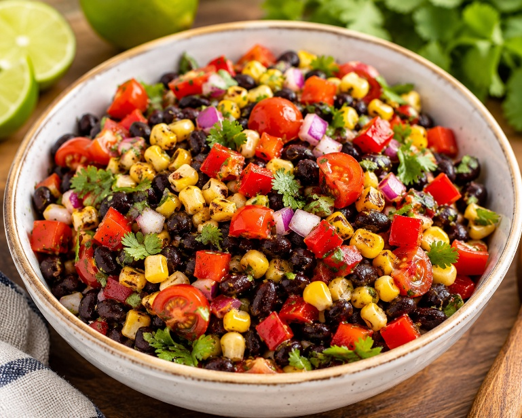
| A fresh, colorful salad that’s perfect for BBQs, potlucks, picnics, or an easy make-ahead lunch. Serving size: 1 Cup |
| Makes: 8 Servings Prep time: 15 Minutes Cook time: 0 Minutes Total time: 15 Minutes | Nutrition: Per Serving 155 Calories. 30 g Carbs, 8 g fiber, 4 g sugar, 18 g protein, 1.5 g fat, 310 mg sodium.. |
Ingredients:
- 2 (15-ounce) cans black beans, drained and rinsed
- 1 (16-ounce) bag Trader Joe’s Fire Roasted Corn, thawed
- 1 red bell pepper, diced
- 1 cup cherry tomatoes, halved
- ¼ cup red onion, finely diced
- ¼ cup fresh cilantro, chopped
Directions:
- In a large bowl, combine the black beans, fire-roasted corn, bell pepper, cherry tomatoes, red onion, and cilantro.
- In a small bowl, whisk together the lime juice, garlic, cumin, salt, and black pepper until well combined.
- Pour the dressing over the salad and gently toss until everything is evenly coated.
- Cover and refrigerate for at least 30 minutes before serving to allow the flavors to blend.
- Stir again before serving. Enjoy chilled.
Tips:: Keeps well in the refrigerator for up to 4 days
| This salad tastes even better the next day. Add diced avocado just before serving for extra creaminess. Serve with tortilla chips or as a side dish with grilled foods |
 Nancy L. Fitness